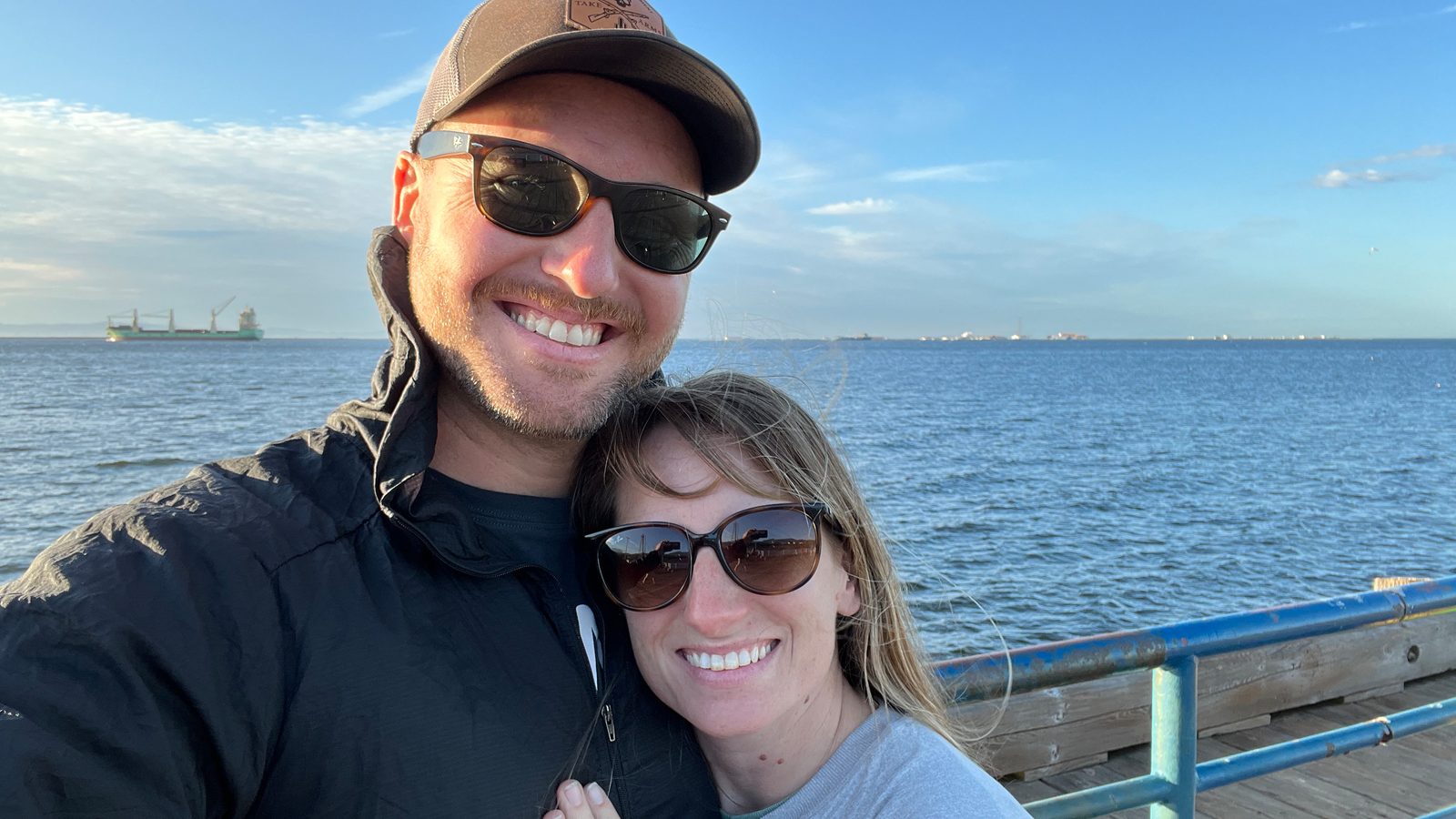
Living in 200 square feet with another adult and two kids is either going to make your marriage bulletproof or break it entirely. We got lucky. But luck had less to do with it than you'd think.
Carol and I have been together for over a decade. We got married, bought a house, had kids, did the conventional thing. And we were fine. Happy, even. But there's a difference between happy and connected, and somewhere in the rush of careers and commutes and kid logistics, we'd drifted into fine without realizing it.
The first six months
The first six months on the road nearly broke us. Not dramatically. Not in some explosive, made-for-TV way. More like a slow grinding. Every small annoyance is amplified when there's no space to retreat to. The way she loads the dishwasher (wrong, but I've stopped saying that). The way I leave my laptop open on the dinette when she needs to make lunch. The way neither of us can have a bad day without the other one being directly in the blast radius.
We fought about stupid things. Who forgot to close the roof vent (me). Who used the last of the water doing dishes when someone still needed to shower (her). Who left the truck keys in the ignition overnight (also me). In a house, you can storm off to another room. In an Airstream, you can walk approximately twelve feet in any direction before you hit a wall.
So we had to figure it out. In real time. With witnesses (the kids, who are always watching).
What changed
We started talking more. Not about logistics, which is what most of our conversations had become. About real things. About how we were feeling. About what we needed. About the parts of this life that were harder than we'd expected and the parts that were better.
These conversations happened at night, after the kids were asleep, sitting outside Colletta in camp chairs, looking at whatever sky was above us. Desert skies. Mountain skies. Coastal skies. The setting changed. The practice didn't.
Carol is emotionally fluent in a way that I am not. She can name what she's feeling and articulate what she needs with a clarity that took me years to match. I'm more of a "process it internally and emerge with a solution" type. The road forced me to meet her halfway. To name the thing. To say "I'm overwhelmed" instead of just getting quiet. To say "I need an hour alone" instead of getting irritable and making everyone else pay for it.
The division of labor
In a tiny home, the division of labor has to be clear. Not because we're traditionalists, but because there's literally no room for inefficiency. I handle the truck, the electrical system, route planning, and campsite research. Carol handles meals, homeschooling, scheduling, and the social calendar (she's better with people than I am by a wide margin). We both clean. We both parent. We both lose our patience and apologize.
This clarity helped our marriage more than any conversation ever did. When you know exactly what your lane is and you trust the other person to handle theirs, resentment doesn't build up. Or at least it builds up slower.
The things you can't fake
You can't fake intimacy in 200 square feet. You can't pretend to be fine when your partner can see your face at every moment. You can't withdraw without it being immediately obvious. The Airstream stripped away every buffer we'd built between us and forced us to be honest.
That sounds terrifying. It was, at first. But on the other side of terrifying is a kind of closeness that I don't think we would have found any other way.
We know each other better now than we did when we started. Not because we spent more time together (although we did). Because we spent more honest time together. The kind of time where there's nowhere to hide and no reason to pretend.
What I'd tell other couples
If you're thinking about doing this, know that it will test your relationship. Not in the ways you expect. The big challenges (breakdowns, bad weather, financial stress) are actually easier to navigate as a team. It's the small, daily, relentless proximity that grinds you down. The cure is communication. Lots of it. More than you think you need.
And camp chairs. Buy good camp chairs. The nightly conversations under the stars are where the real work happens.