We'd been in Spain for three weeks, supposedly chasing sunshine. It rained every day. Millie had just turned five. We weren't ready to go home yet, and Greece was high on our list. Carol had been twenty years ago. The kids and I had never been. So we booked it.
The real catalyst was the mythology. Calvin had torn through the Percy Jackson books. We'd all been listening to the Greeking Out podcast on drives and at bedtime. Calvin and Millie could name more Olympians than most adults. So the logic was simple: let's go see where all of this actually happened.
Athens first, because you have to
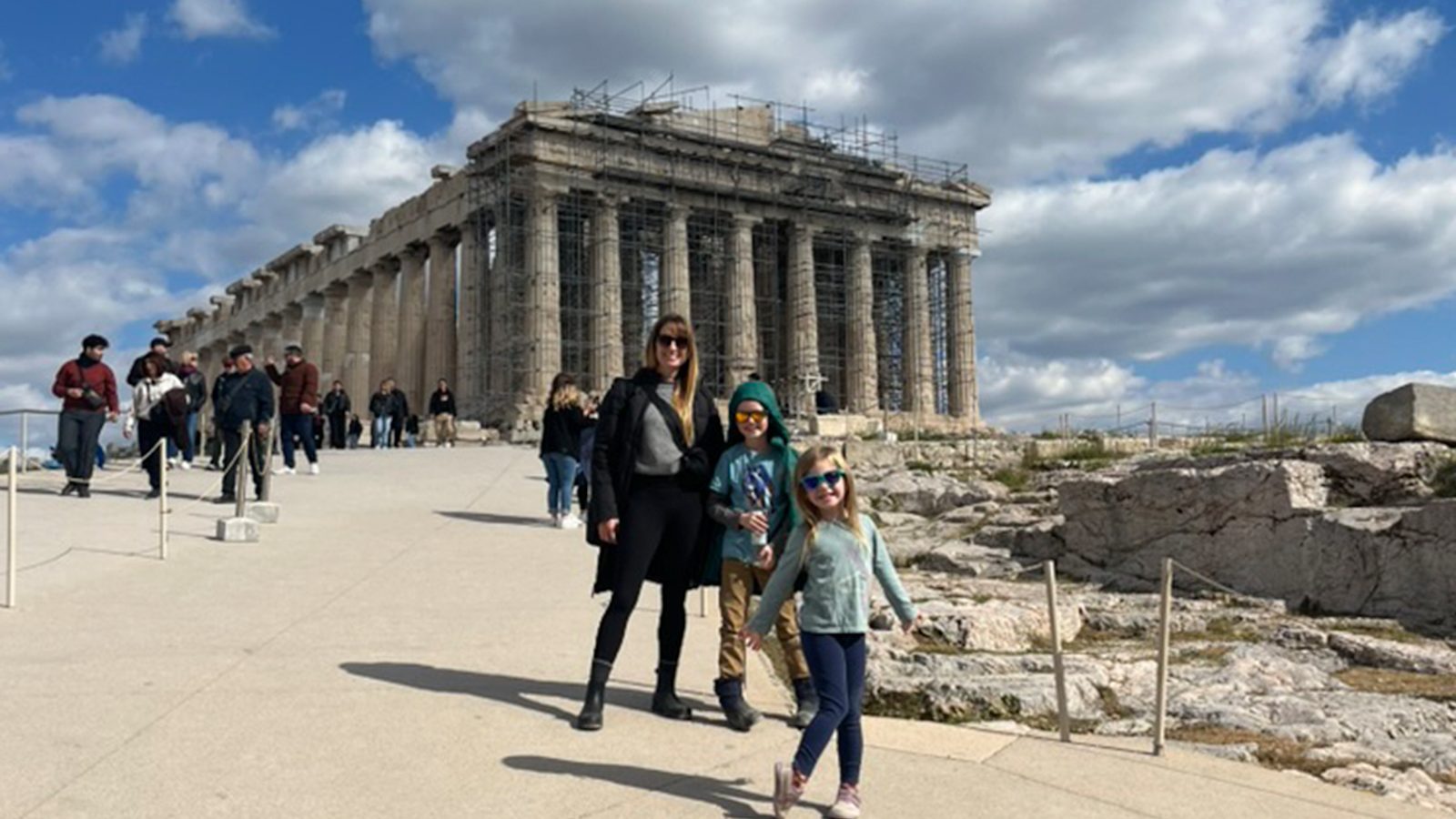
We flew in and spent three nights exploring the city. Carol remembered Athens being dusty and grimy from her trip years ago. That's not what we found. The areas around the Acropolis have clearly been cleaned up, polished for the tourist economy. Greece fully appreciates that tourism is a primary export, and it shows.
The Acropolis Museum was the highlight for the kids. Not because they're suddenly into classical architecture, but because it told a story they already cared about. They could see the blank spots on the recreated frieze where pieces had been destroyed or stolen. And then the museum points out exactly where each missing piece ended up, mostly in England. Calvin was fascinated by the idea that someone just showed up with a ship and took things. He's still annoyed about it.
On the walk up to the Acropolis we found tortoises just living in the gardens. Calvin called them "god tortoises" because they were surrounded by lush greenery and basically living like royalty. That's not wrong. We also spent time in the botanical gardens, where the kids ran around the playground while Carol and I drank coffee and pretended to be people who take vacations in European parks. Underneath the ancient sites, there are excavated homes where you can see the plumbing systems. Public bathhouses, communal toilets. Calvin was equal parts horrified and delighted that going to the bathroom was a social event in ancient Athens.
Naxos: the island we actually chose
We wanted an island, and we wanted it to connect to the mythology. The original plan was to island-hop, but it was early March and most ferries weren't running. Santorini was completely off the table. Over twenty thousand earthquakes in February had led to an evacuation of the island. So we picked Naxos based on a few friends' recommendations (some from our Boundless Life community) and the fact that Zas Cave, the mythical birthplace of Zeus, was there.
The ferry from Athens was our first pro tip in action: upgrade to business class. The cost difference is small and the comfort difference is significant. The seas were calm. The kids settled in. It was the least stressful way to travel with a five-year-old and a nine-year-old.
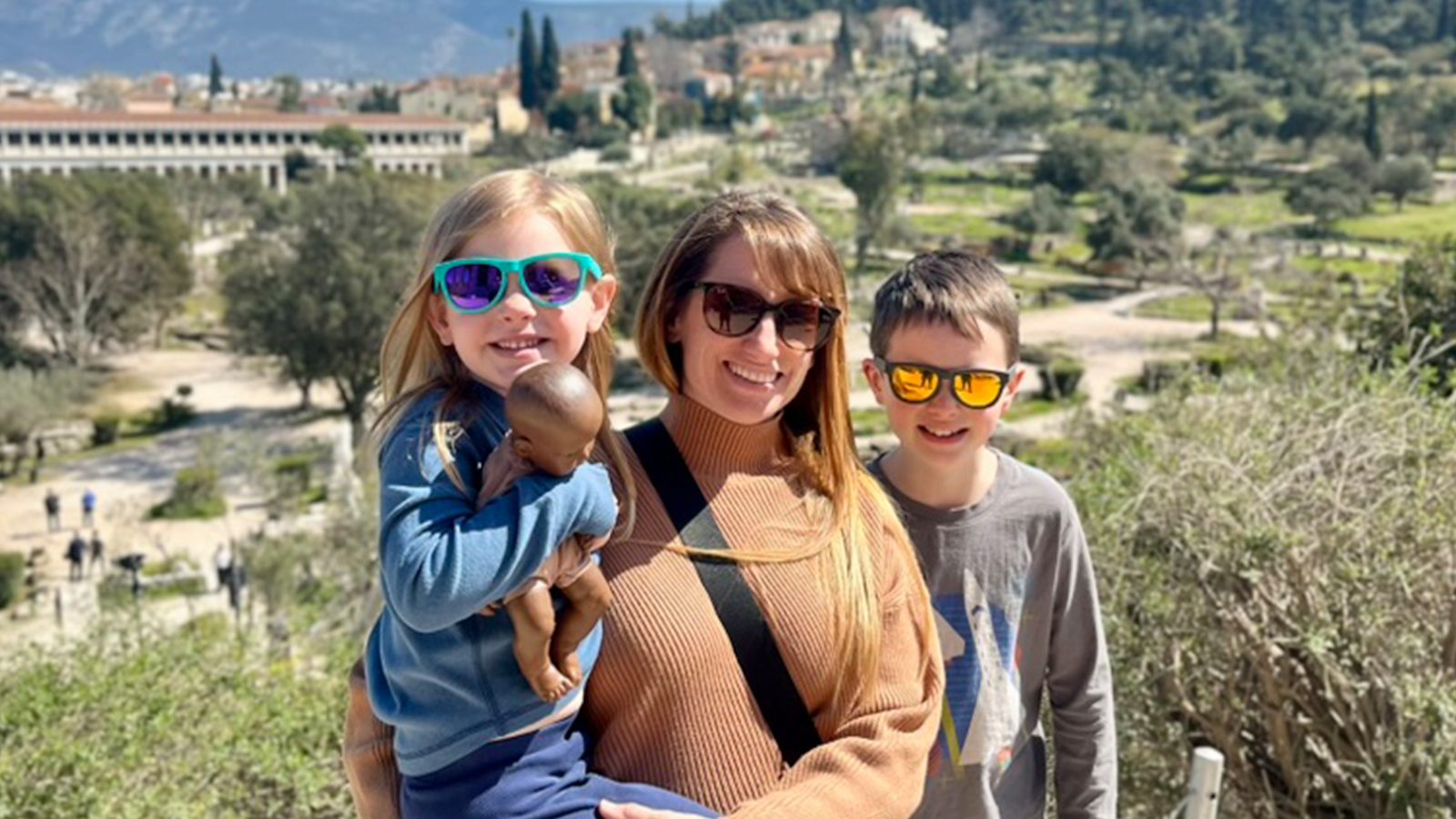
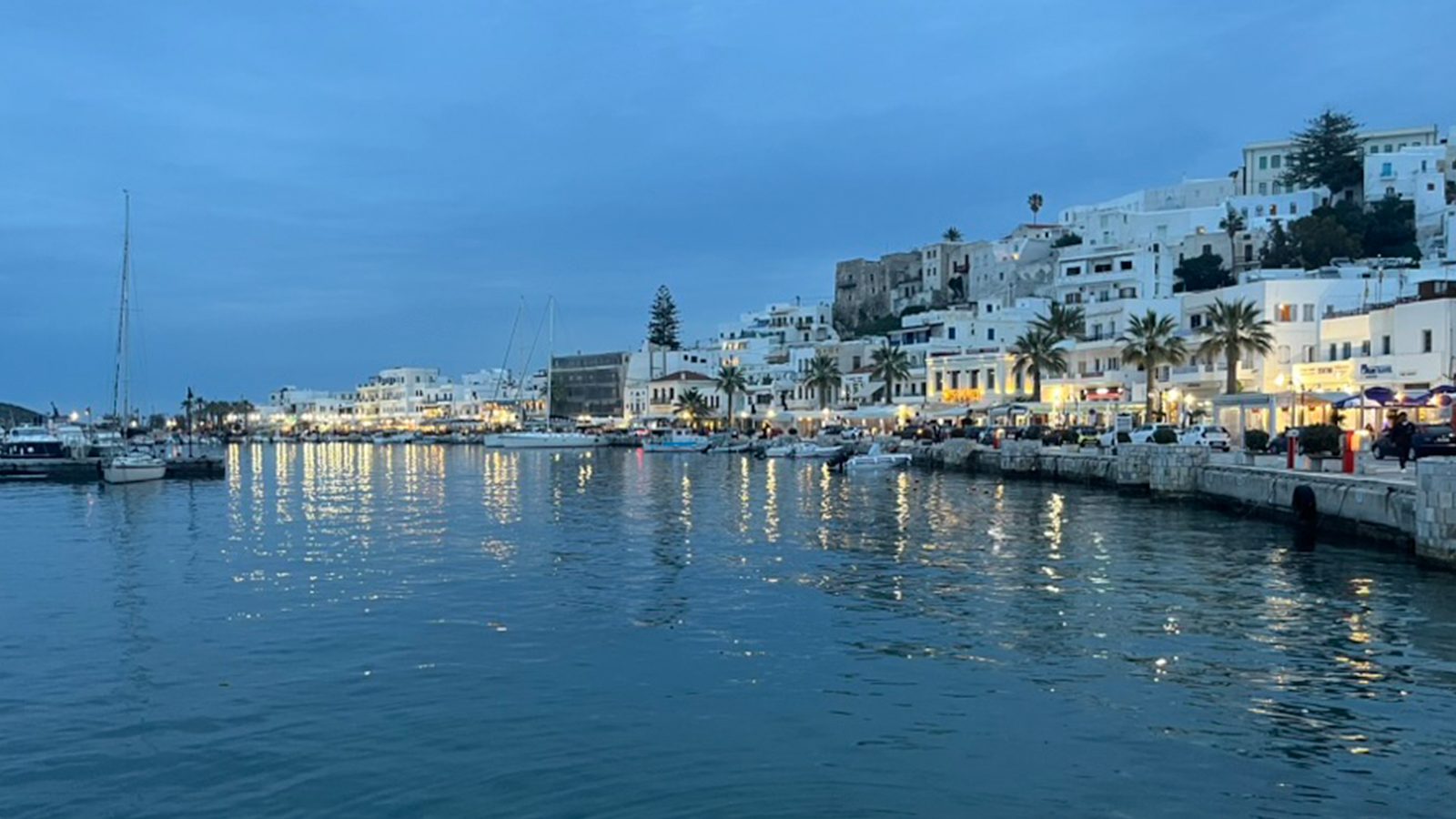
Naxos was lovely. Small, quiet, just starting to wake up for the season. We stayed at an Airbnb with a hot tub and rented a car so we could drive the full loop around the island. The countryside is stunning in a way that doesn't photograph well. You have to be there, making turns on narrow roads with the sea below and terraced hills above.
The water clarity was the thing that stuck with Carol. She kept saying she wanted to jump in but it was too cold. Calvin, obviously, jumped in. The color was something none of us had seen before. Millie and Calvin stripped down to their underwear on the beach one afternoon and just ran in and out, screaming. Carol's exact words: we have to come back when it's warm.
Zeus' cave
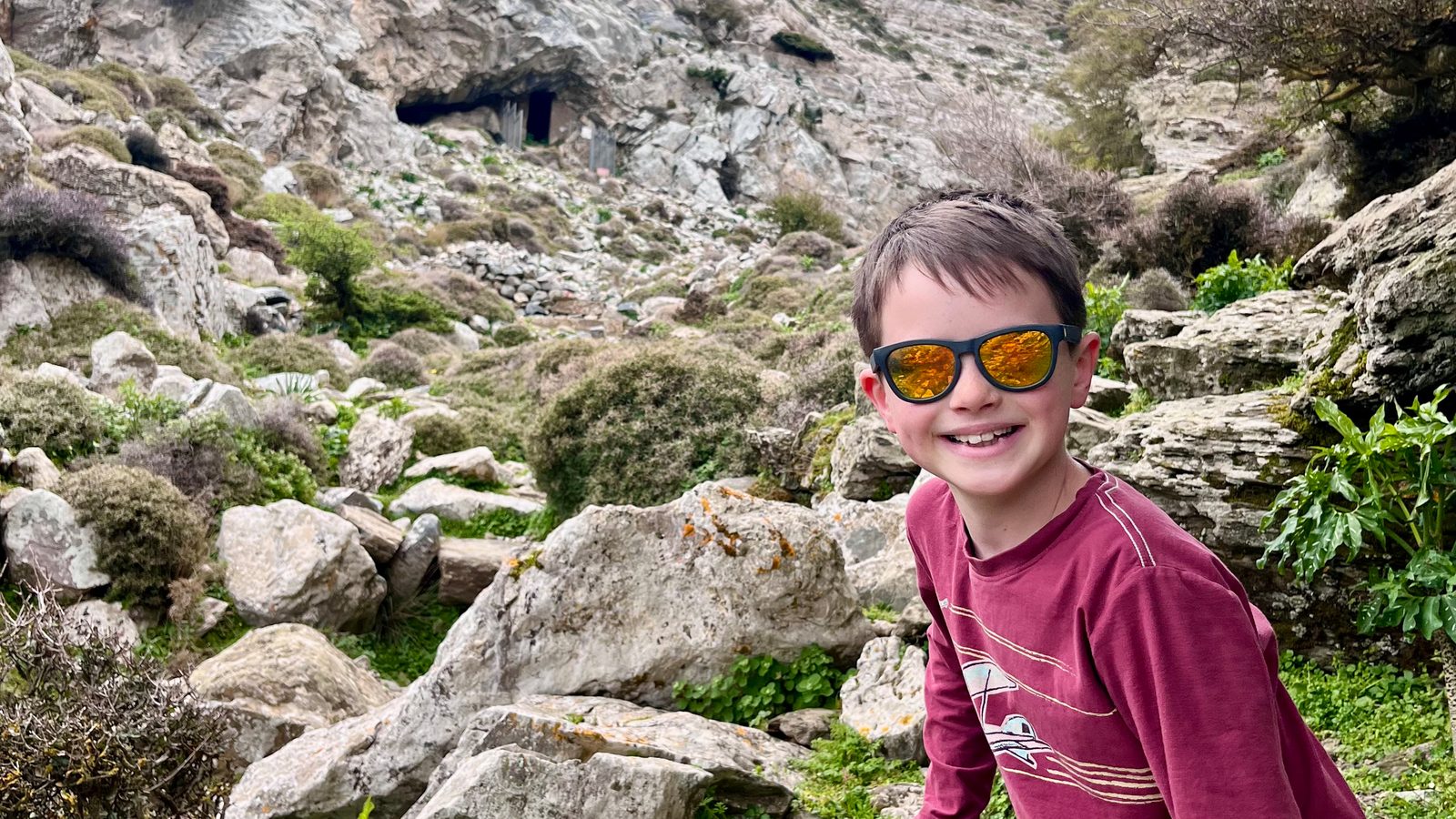
The hike to Zas Cave was one of the high points of the trip, literally and figuratively. We drove to a trailhead you'd never find without directions and hiked up through rocky terrain to the cave where, according to myth, baby Zeus was hidden from his father Kronos and raised by a goat named Amalthea.
The goat was not in the cave. Calvin pointed out that the goat is probably up on Olympus now, taking a vacation. An "honored god goat," in his words. He's not wrong. But the views from up there were incredible, and being able to tie a physical place back to stories the kids had been reading for months was the whole point of this trip. That connection between learning something and then standing in the place where it happened is the thing we chase with this lifestyle.
The catamaran
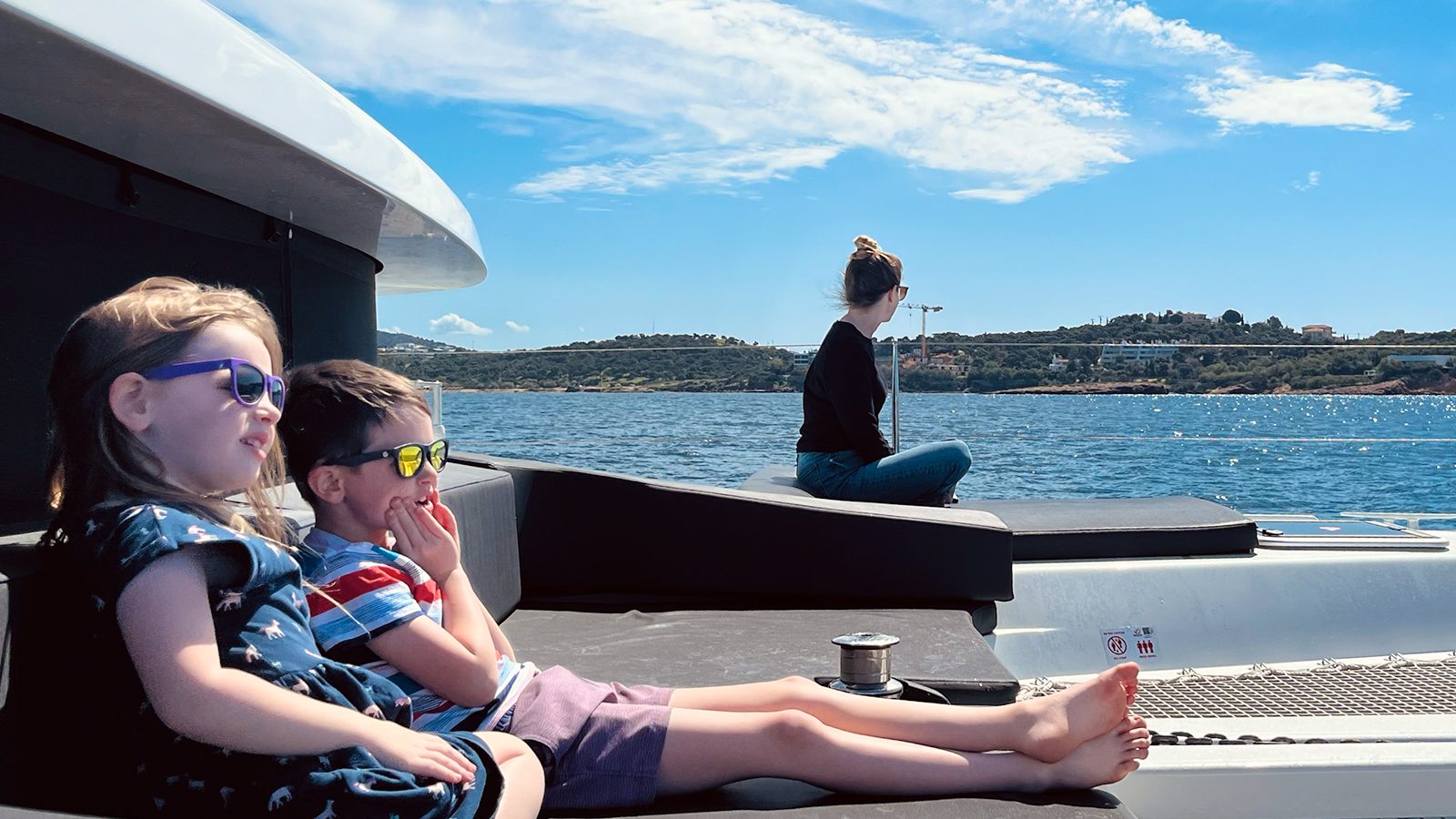
Back in Athens for the final stretch, we wanted to get out on the water. The ferry schedules and Santorini evacuation meant a standard island hop wasn't happening. So we took the bougie route and chartered a private catamaran with a captain and a chef for the day.
It was cold. The Aegean in March is not warm. Carol, Calvin, and Millie all jumped in. I'm pretty sure Calvin levitated out of the water on his first dip. Carol took a video that she claims proves it. He went in a second time because he's Calvin. The chef made Greek sausage, which Calvin fell in love with (along with the actual sausage). For the rest of the trip, both kids campaigned relentlessly for us to buy that boat and keep it in a boathouse.
Carol and I have talked about boat life as a next chapter after the Airstream. Many YouTube families do the transition. But Carol gets seasick, so Calvin's proposed solution of just putting her on enough boats until she stops being sick probably won't fly. The charter was a perfect compromise: one great day on the water, solid ground at night.
The food and the coffee
Naxos is known as a food island, and it earned it. Everything is fresh. The fish, the salads, the meat. People grow it, catch it, serve it. I had the best tzatziki of my life there, which is a sentence I never expected to write with that much conviction. The kids ate fries. Millie discovered she loved fries with herbs on top, which she called "fries with grass." She was all about the grass.
Carol and I also fell hard for the Greek yogurt. Thick, heavy, with slabs of honey and nuts and fruit. Millie did not share this enthusiasm. She likes Greek yogurt from a container. Not from Greece.
The coffee was a revelation. Greek coffee is somehow underrated despite being incredible. I found a shaken version, iced with sugar, served like a cocktail, and I spent the rest of the trip ordering them. Weeks later I was in DC for work trying to order one at a coffee shop. Nobody knew what I was talking about.
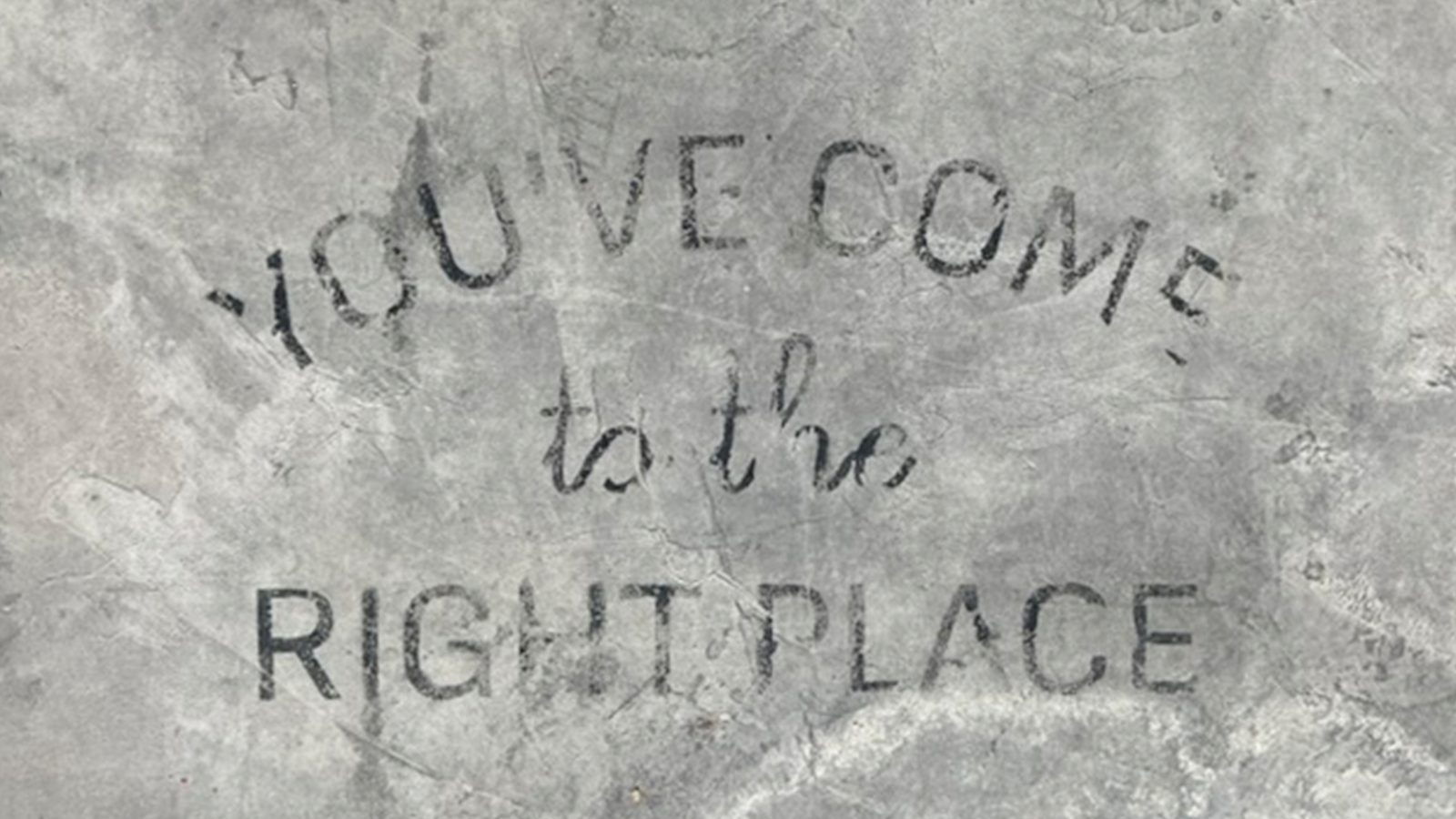
At one of our first restaurants on Naxos, there were words painted on the ground: "You've come to the right place." Calvin ordered a massive rack of ribs. The waiter was so great that he gave us his friend's number for renting a car and wrote down a list of places to visit. We saw him three more times that week because the town is that small. That kind of interaction is why we travel off-season. In July, that waiter has a hundred tables a night. In March, he's got time to care about where you're going next.
Poseidon's temple and stolen artifacts
We visited the Temple of Poseidon at Cape Sounion. Calvin is still a little annoyed that it's been partially destroyed over the centuries. He has strong feelings about the preservation of ancient Greek monuments, which is a sentence I didn't expect to write about a nine-year-old. But the Acropolis Museum had planted a seed. Once you show a kid that someone literally sailed in with a boat and stole pieces of a building, they don't forget it. The connection to similar stories in Egypt wasn't lost on us. The Western world did a lot of pillaging in that part of the world, and it's good to see some of it coming back.
Why we'll go back
Greece felt foreign and comfortable at the same time, which is the best kind of travel. Like Morocco, it was a place where I could immediately picture owning a house and spending part of the year. The scenery, the food, the people. It all just works.
We barely scratched the surface. We didn't get to Olympia, where the Olympics began. We didn't do the mountains, which people say offer a completely different side of the country. We didn't even make it to most of the places referenced in the Greeking Out episodes that started this whole trip. Crete, Corfu, Delphi, the list goes on.
Carol's travel philosophy is right: first trip, do the big things. Second trip, find the places people don't talk about. Calvin summed it up differently: "the smaller, more things that people don't know and talk about as much but are still important."
We're going back. And this time, the water will be warm enough for Carol.