
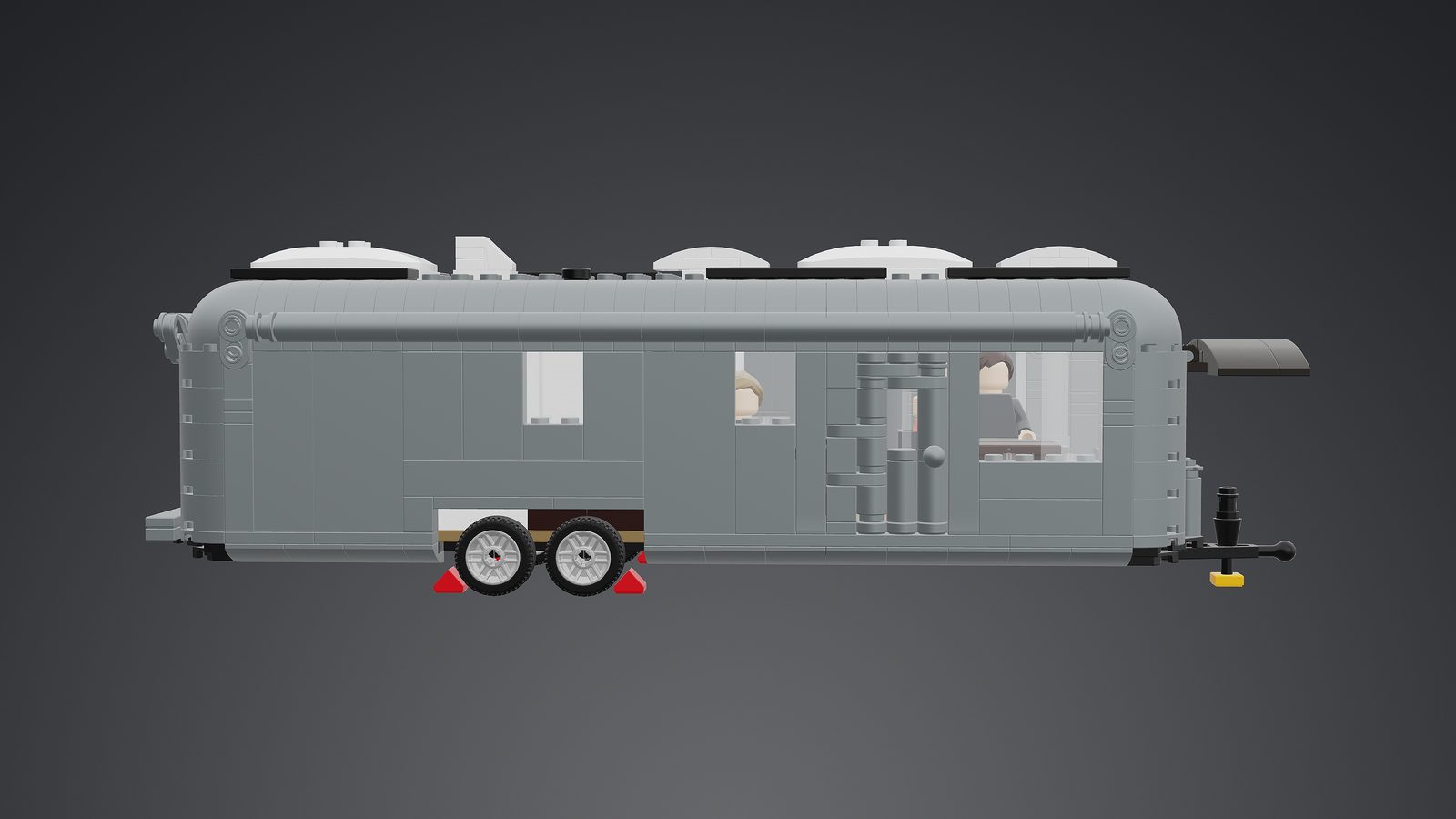
In the spring of 2022, we were living in an apartment on the Upper West Side of Manhattan. Colletta was in storage in upstate New York. We hadn't towed her in months. The kids were in the city, Carol was figuring out our next chapter, and I was sitting at a desk doing remote work and missing our Airstream more than I'd expected to.
So I did what any reasonable person would do. I built her out of LEGO.
The design
I started in Mecabricks, a browser-based LEGO design tool that lets you build digitally with real brick dimensions and part numbers. The goal was to recreate our 1979 Airstream Sovereign as accurately as possible at minifig scale — the rounded shell, the windows, the door placement, the awning, even the roof vents. Not a generic trailer. Our trailer.
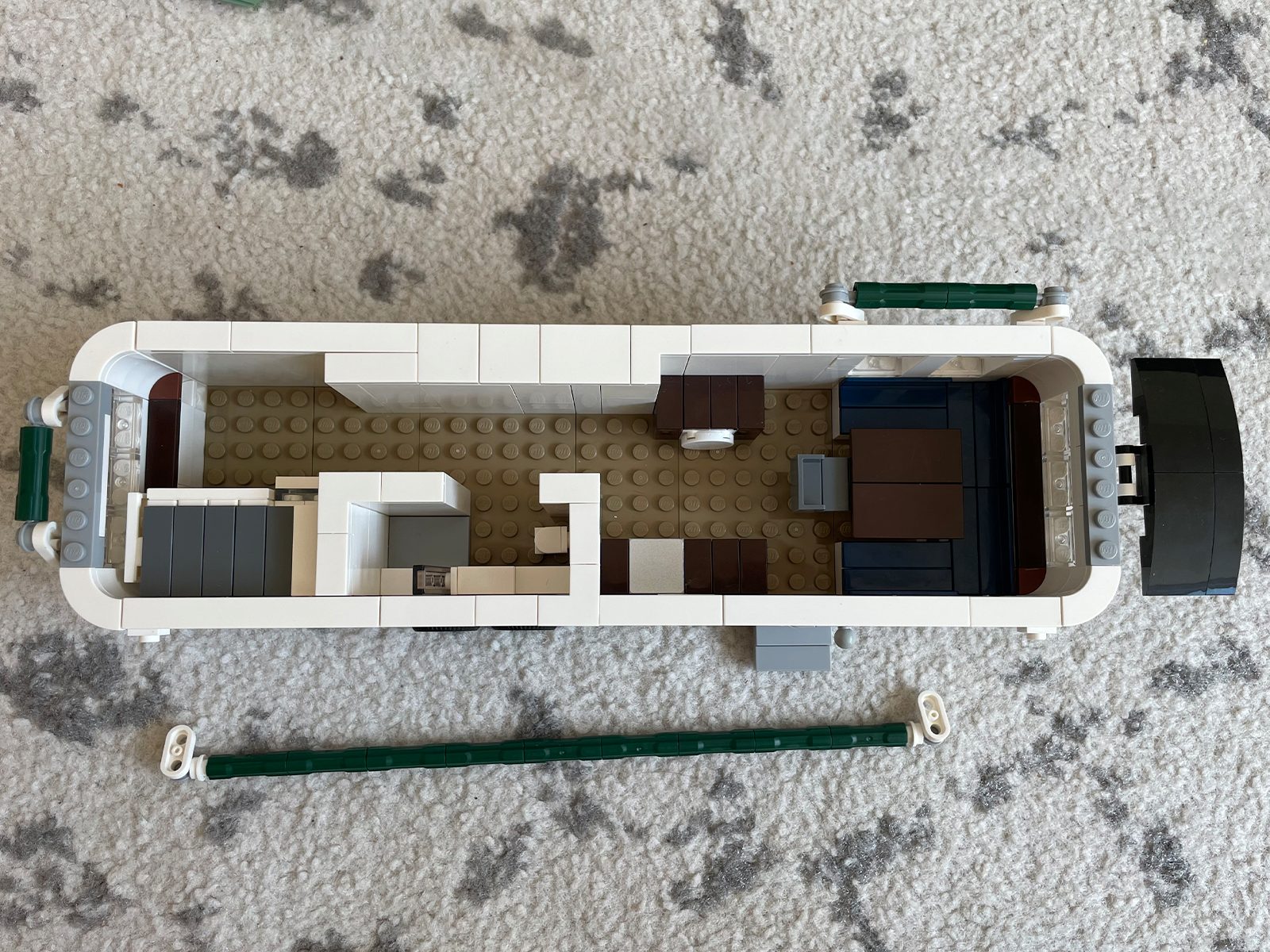
The interior was the part I cared about most. Colletta's floor plan is burned into my memory. I rebuilt it brick by brick: the galley kitchen along the street side, the dinette that converts to Calvin's bed, the rear bedroom where Carol and I sleep, the bathroom with its impossibly small shower. Even the couch where Millie naps. Everything in its right place.
The design came out to 554 pieces across 126 unique part-and-color combinations. 97 distinct part types. 16 different colors — including some fun ones like Glow In Dark Trans for the windows, Metallic Silver for the Airstream shell accents, and Lime for a few interior details. Eight parts didn't even exist on BrickLink and had to be sourced separately.
Sourcing the parts
This is where it got obsessive. LEGO doesn't sell individual bricks in the exact colors and quantities you need for a custom design. You have to source them from BrickLink — essentially an eBay for LEGO parts, run by thousands of small sellers around the world.
Over five months, from late February through July 2022, I placed orders with at least 13 different sellers across 5 countries. Packages arrived at our Manhattan apartment from Montana, Oregon, Kentucky, Virginia, Minnesota, Quebec, Hungary, Belgium, and the Czech Republic. I paid in US dollars, Canadian dollars, euros, Hungarian forints, and Czech koruna. My BrickLink username was uberoptix, which tells you something about how seriously I was taking this.
The single largest quantity of any one part was 64 white 1x1 bricks — the backbone of Colletta's iconic aluminum shell. White was the most-used color overall, followed by black for the chassis and structural frame. That tracks. Airstreams are silver and white. The bones are always dark.
Total cost from the PayPal receipts I can find: at least $208 USD, and that doesn't include the Hungarian, Belgian, Czech, and Canadian orders paid in local currencies. A Czech seller gave me a coupon worth about $4.43, which I thought was a nice touch. The whole thing probably cost somewhere north of $300 when you account for everything. For 554 pieces. Carol had opinions about this.
The build
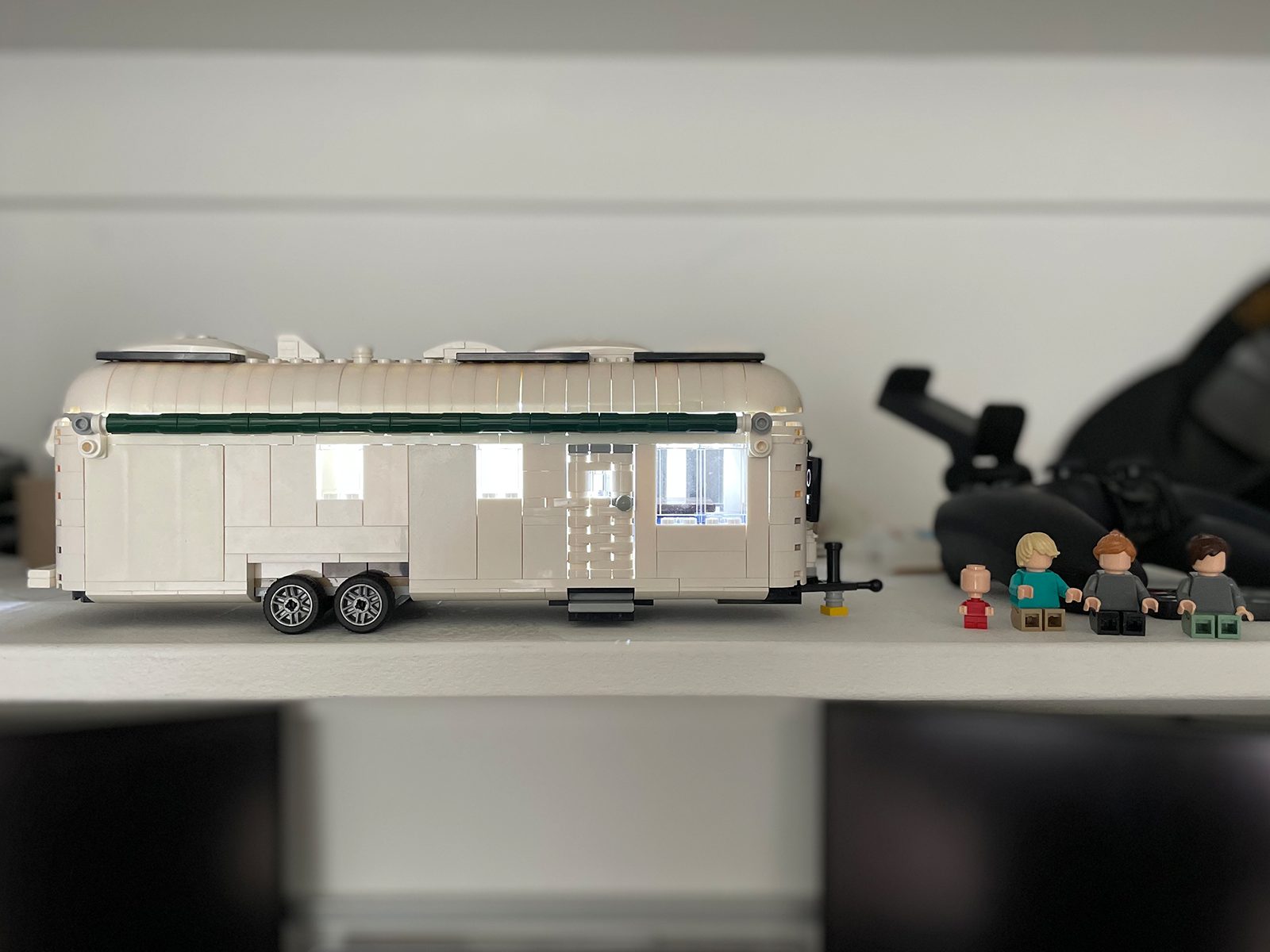
Once all the parts arrived (the last order didn't ship until July), the actual assembly took a few evenings. That's the thing about the sourcing phase — it's 95% of the work. When every brick is finally in front of you, sorted by color and type, the build itself is almost meditative. You just follow the design you already made and watch it come together.
The curved roof was the hardest part structurally. Airstreams have that distinctive rounded profile, and getting LEGO bricks to approximate a curve requires some creative use of slope pieces and hinged plates. I went through three iterations before finding a combination that held together and looked right.
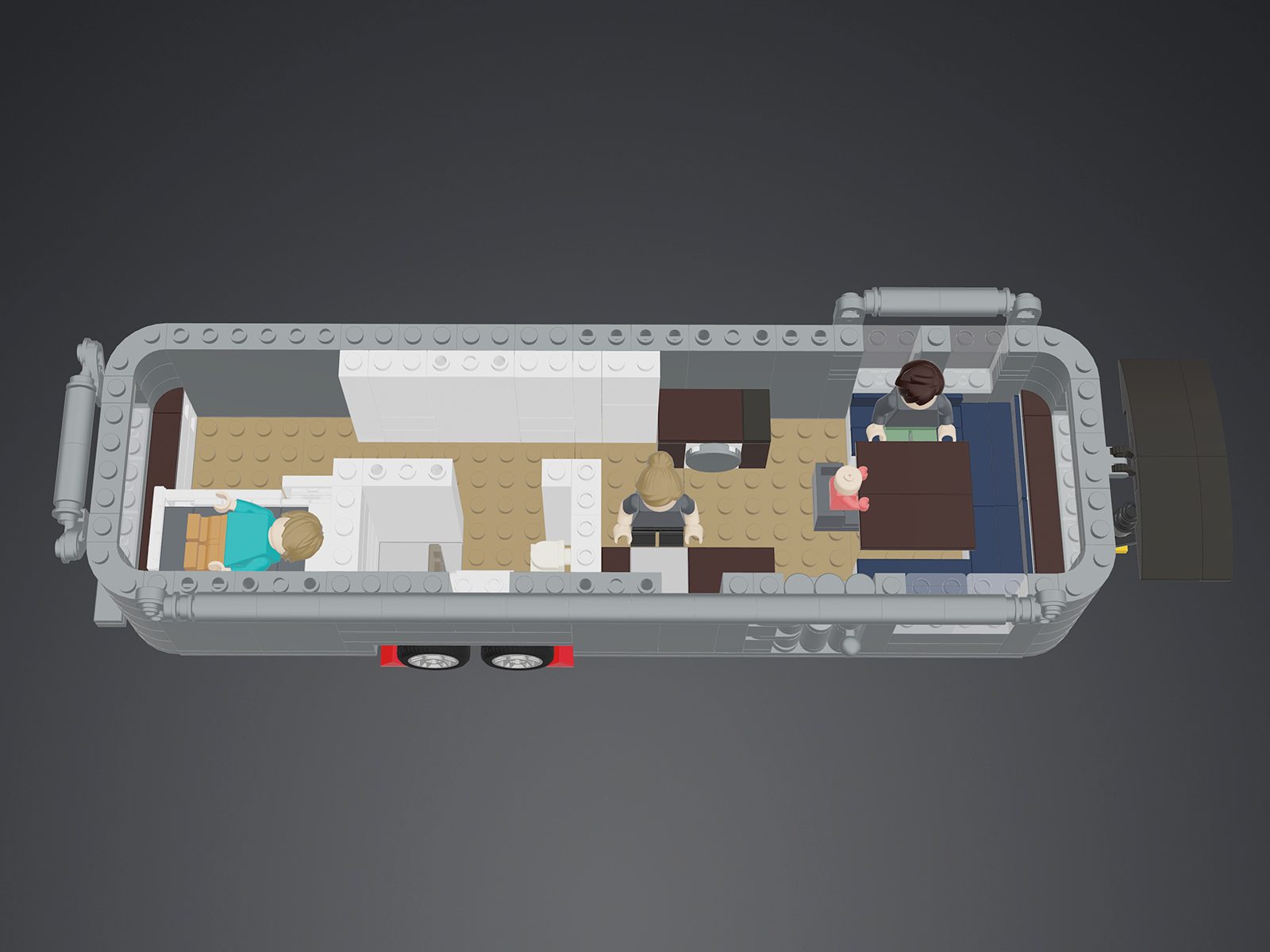
The removable roof was a design choice I'm glad I made. Pop it off and you can see the entire floor plan — the kitchen along one wall, the little bathroom, the dinette with its table, the bedroom in the back. Everyone who picks it up takes the roof off first. It's the part that makes people say "oh, wow."
The finishing touch was the light kit. Calvin had a Mandalorian LEGO set that he'd long since torn apart and rebuilt into something else — that's how LEGO works in this house, nothing stays as designed for more than a week. I raided the leftover parts and found a small LED light kit that fit perfectly inside the Airstream shell. It gives the whole thing a warm glow from the inside, like someone's home.
Why this mattered
I want to be honest about what this project was. It wasn't a fun craft. It was coping.
We'd spent years building Colletta from a bare aluminum shell into our home. I wired every circuit, installed every fixture, measured and cut and swore my way through a full renovation. That trailer was the most tangible thing I'd ever made with my hands. And then we parked her in storage, moved to New York so I could start my first year at AWS, and I didn't know when we'd see her again.
This is the first time in five years that we've stayed put. Calvin is in public school — PS 87 on the Upper West Side — and loving it. Millie is adapting to city life in her own way, which mostly involves pointing at dogs and demanding we get one. Carol is recalibrating. We all are. After years of constant motion, standing still feels strange.
Building a miniature version of your home because you miss your home is exactly as sentimental as it sounds. I'm not going to pretend otherwise. Some people journal. Some people meditate. I sourced 64 white 1x1 bricks from a guy in Montana and rebuilt my Airstream on a shelf in Manhattan.
Calvin thought it was cool. Millie wanted to play with the minifigures (she was not allowed). Carol understood what it was really about and didn't say anything, which is how you know she understood completely.
She's sitting on a shelf in our apartment now, glowing. The LEGO one, I mean. The real one is in storage upstate, waiting for whenever we figure out what comes next.
554 pieces. 13 sellers. 5 countries. One Airstream. If you want to explore the full 3D model and parts list, it's on Mecabricks.